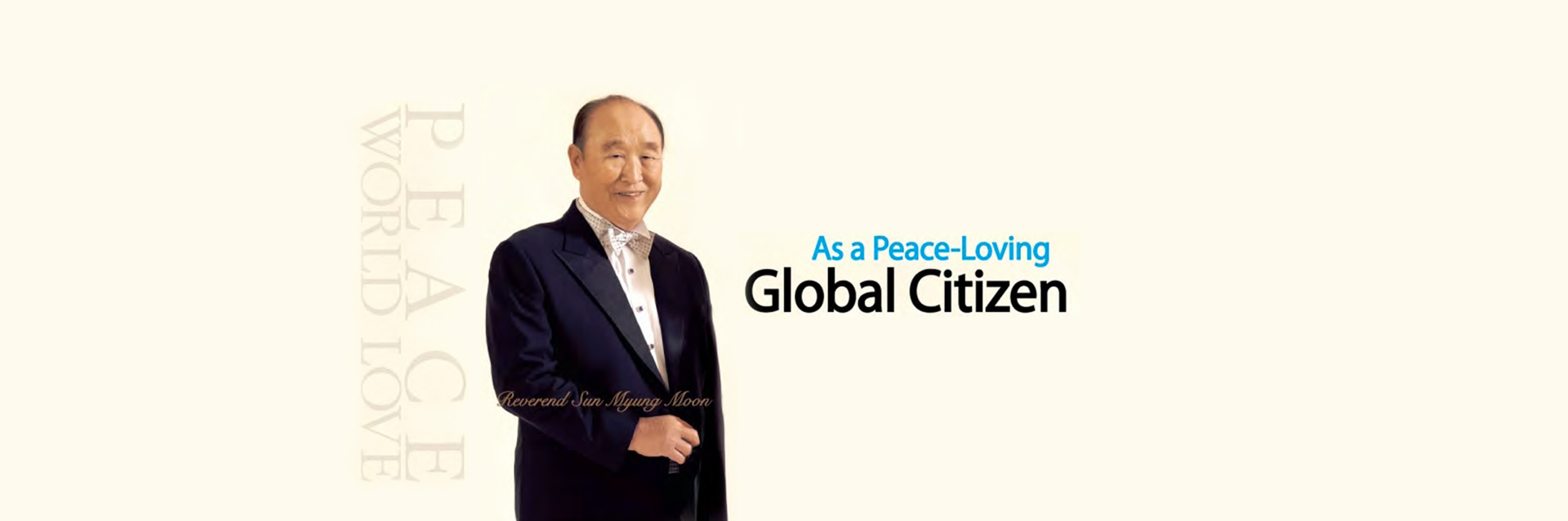
Autobiography: As a Peace-Loving Global Citizen
Chapter 2: A River of Heart Flows with Tears
Between Fear and Inspiration
As I grew older and more mature, I became preoccupied with the question, “What will I be when I grow up?” I enjoyed observing and studying nature, so I gave some thought to becoming a scientist. However, I changed my mind after I saw the tragedy of how people were plundered by the Japanese colonial authorities. They suffered so much that they could not even feed themselves. It didn’t seem that becoming a scientist, even if it led to my winning a Nobel Prize, would be a way for me to wipe away the tears of suffering people.
I wanted to become a person who could take away the tears that flowed from people’s eyes and the sorrow that was in their hearts. When I was lying in the forest listening to the songs of the birds, I would think, “The world needs to be made as warm and tender as those songs. I should become someone who makes people’s lives as fragrant as flowers.” I didn’t know what career I should pursue to accomplish that, but I became convinced that I should be a person who could give happiness to people.
When I was ten our family converted to Christianity by the grace of Great-Uncle Yun Guk Moon, who was a minister and led a fervent life of faith. From then on, I attended church faithfully, without ever missing a week. If I arrived at service even a little late, I would be so ashamed that I could not even raise my face. I don’t know what I could have understood at such a young age to inspire me to be this way, but God was already a huge presence in my life. I was spending more and more time wrestling with questions dealing with life and death, and the suffering and sorrows of human existence.
When I was twelve, I witnessed my great-grandfather’s grave being moved. Normally, only adults in the clan would be allowed to attend such an occasion, but I wanted very much to see for myself what happened to people after they died. I eventually persuaded my parents to allow me to come along. When the grave was dug up and I saw his remains, I was overcome with shock and fear. While the adults opened the grave with solemn ceremony, all I saw was a scrawny skeleton. There was no trace of the features my father and mother had described to me. There was only the hideous sight of white bones.
It took me a while to get over the shock of seeing my great-grandfather’s bones. I said to myself, “Great-grandfather must have looked just like us. Does this mean my parents, too, will turn into just a bunch of white bones after they die? Is this what will happen to me when I die? Everyone dies, but after we die, do we just lie there unable to think about anything?” I couldn’t get these questions out of my head.
Around that same time, a number of strange events occurred in our home. I have a vivid memory of one in particular. Each time our family wove cloth, we would take the snippets of thread from the spinning wheel and save them in an earthenware jar until we had enough to make a bolt of cloth. The cloth we made from these snippets, called yejang, was a special cloth used when a child in the family was getting married. One night, these snippets were found scattered all over the branches of an old chestnut tree in a neighboring village. They made the tree look like it had turned white. We couldn’t understand who would have taken the snippets from the jar and carried them all the way to the chestnut tree, which was quite a distance from our home, and then spread them all over the tree. It didn’t seem like something that could be done by human hands, and it frightened everyone in the village.
When I was sixteen, we experienced the tragedy of having five of my younger siblings die in a single year. No words could describe the heartbreak of our parents in losing five of their thirteen children in such a short time. Death seemed to spread. Other clan members lost their livestock. One home’s cow suddenly died, though it had been in perfect health. At another home, several horses died, one after another. At a third home, seven pigs died in one night.
The suffering of one family seemed connected to the suffering of the nation and of the world. I was increasingly troubled to see the wretched situation of the Korean people under Japan’s increasingly tyrannical rule. People didn’t have enough to eat. They were sometimes forced to take grass, tree bark, and whatever else they could find, and boil these for food. There seemed to be no end to wars around the world. Then one day I read an article in a newspaper about the suicide of a middle school student who was the same age as I.
“Why did he die?” I asked myself. “What would drive a person to kill himself at such a young age?” I was devastated by this news, as if it had happened to someone who had been close to me. With the newspaper open to that article, I wept aloud for three days and nights. The tears kept coming, and I couldn’t make them stop.
I couldn’t comprehend the series of strange events, or the fact that tragic events were happening to good people. Seeing the bones of my great-grandfather had inspired me to start asking questions about life and death, and the series of unusual events in and around our home caused me to hang on to religion. The Word of God I was hearing in church, however, was not sufficient by itself to give me the clear answers I was seeking. To relieve the frustrations in my heart, I naturally began to immerse myself in prayer.
“Who am I? Where did I come from? What is the purpose of life? What happens to people when they die? Is there a world of the eternal soul? Does God really exist? Is God really all-powerful? If He is, why does He just stand by and watch the sorrows of the world? If God created this world, did He also create the suffering that is in the world? What will bring an end to Korea’s tragic occupation by Japan? What is the meaning of the suffering of the Korean people? Why do human beings hate each other, fight, and start wars?” My heart was filled with these serious and fundamental questions. No one could easily answer them for me, so my only option was to pray. Prayer helped me to find solace. Whenever I laid out the anguishing problems in my heart to God, all my suffering and sorrow vanished and my heart felt at ease. I began spending more and more time in prayer, to the point that, eventually, I began praying through the night all the time. As a result, I had a rare and precious experience in which God answered my prayers. That day will always remain as the most cherished memory of my life—a day I can never forget.
It was the night before Easter in the year I turned sixteen. I was on Mount Myodu praying all night and begging God in tears for answers. Why had He created a world so filled with sorrow and despair? Why was the all-knowing and all-powerful God leaving the world in such pain? What should I do for my tragic homeland? I wept in tears as I asked these questions repeatedly.
Early Easter morning, after I had spent the entire night in prayer, Jesus appeared before me. He appeared in an instant, like a gust of wind, and said to me, “God is in great sorrow because of the pain of humankind. You must take on a special mission on earth having to do with Heaven’s work.”
That day, I saw clearly the sorrowful face of Jesus. I heard his voice clearly. The experience of witnessing the manifestation of Jesus caused my body to shake violently, like a quaking aspen’s leaves trembling in a strong breeze. I was simultaneously overcome with fear so great I felt I might die and gratitude so profound I felt I might explode. Jesus spoke clearly about the work I would have to do. His words were extraordinary, having to do with saving humanity from its suffering and bringing joy to God.
My initial response was, “I can’t do this. How can I do this? Why would you even give me a mission of such paramount importance?” I was truly afraid. I wanted somehow to avoid this mission, and I clung to the hem of his clothing and wept inconsolably.
The More It Hurts, the More You Should Love
I was thrown into extreme confusion. I couldn’t open my heart to my parents and share my huge secret with them. But neither could I just keep it to myself. I was at a loss over what to do. What was clear was that I had received a special mission from Heaven. It was such a huge and tremendous responsibility. I shuddered in fear to think that I might not be able to handle it on my own. I clung to prayer even more than before, in an attempt to quiet my confused heart. But even this had no effect. No matter how much I tried, I could not free myself for even a moment from the memory of having met Jesus. In an effort to quiet my heart and my tears, I composed the following poem:
Crown of Glory
When I doubt people, I feel pain.
When I judge people, it is unbearable.
When I hate people, there is no value to my existence.
Yet if I believe, I am deceived.
If I love, I am betrayed.
Suffering and grieving tonight, my head in my hands,
Am I wrong?
Yes I am wrong.
Even though we are deceived, still believe.
Though we are betrayed, still forgive.
Love completely, even those who hate you.
Wipe your tears away and welcome with a smile
Those who know nothing but deceit,
And those who betray without regret.
O, Master, the pain of loving.
Look at my hands.
Place your hand on my chest.
My heart is bursting, such agony.
But when I love those who acted against me,
I brought victory.
If you have done the same things,
I will give you the Crown of Glory.
My encounter with Jesus changed my life completely. His sorrowful expression was etched into my heart as if it had been branded there, and I could not think of anything else. From that day on, I immersed myself completely in the Word of God. At times, I was surrounded by endless darkness and filled with such pain that it was difficult to breathe. At other times, my heart was filled with joy, as though I were watching the morning sun rise above the horizon. I experienced a series of days like these that led me into a deeper and deeper world of prayer. I embraced new words of truth that Jesus was giving me directly and let myself be completely captivated by God. I began to live an entirely different life. I had many things to think about, and I gradually became a boy of few words.
Anyone who follows the path of God must pursue his goal with his whole heart and total dedication. It requires a steadfastness of purpose. I am stubborn by birth, so I have always had plenty of tenacity. I used this God-given tenacity to overcome difficulties and follow the way that was given me. Anytime I began to waver, I steadied myself by remembering: “I received God’s word directly.” It was not easy to choose this course, because it would require me to sacrifice the rest of my youth. At times, I felt I would rather avoid the path.
A wise person will place hope in the future and continue to move forward, no matter how difficult it may be. A foolish person, on the other hand, will throw away his future for the sake of immediate happiness. I, too, at times held foolish thoughts when I was still very young, but in the end I chose the path of the wise person. I gladly offered up my life in order to pursue the way God desired. I could not have run away if I tried; this was the only way I could have chosen.
So why did God call me? Even now, at ninety years of age, I wonder every day why God called me. Of all the people in the world, why did He choose me? It wasn’t because I had a particularly good appearance, or outstanding character, or deep conviction. I was just an unremarkable, stubborn, and foolish young boy. If God saw something in me, it must have been a sincere heart that sought Him with tears of love. Whatever the time or place, love is most important. God was searching for a person who would live with a heart of love and who, when faced with suffering, could cut off its effects with love. I was a boy in a rural village with nothing to show for myself. Even now, I insist uncompromisingly on sacrificing my life to live for God’s love and nothing else.
There was nothing I could know on my own, so I took all my questions to God. I asked, “God, do You really exist?” and that was how I came to know that He did, in fact, exist. I asked, “God, do You have any cherished desires?” and this was how I came to know that He, too, had cherished desires. I asked Him, “God, do You need me?” and this was how I discovered that He had use for me.
On those days when my prayers and dedication connected to Heaven, Jesus appeared to me without fail and conveyed special messages. If I was earnest in my desire to know something, Jesus would appear with a gentle expression and give me answers of truth. His words were always on the mark, and they struck deep into my bosom like sharp arrows. These were not mere words; they were revelations about the creation of the universe that opened the door to a new world. When Jesus spoke, it seemed like a soft breeze, but I took his words to heart and prayed with an earnestness strong enough to uproot a tree. Gradually, I came into a new realization about God’s purpose in creating the universe and His principles of creation.
During the summer of that year, I went on a pilgrimage around the country. I had no money. I would go to homes and ask to be fed. If I was lucky, I caught a ride on a truck. This was how I visited every corner of the country. Everywhere I went, I saw that my homeland was a crucible of tears. There was no end to the sorrowful sighs of suffering from hungry people. Their woeful lamentations turned to tears that flowed like a river.
“This wretched history must end as quickly as possible,” I told myself. “Our people must not be left to suffer in sorrow and despair. Somehow, I need to find a way to go to Japan and to America so that I can let the world know the greatness of the Korean people.”
Through this pilgrimage, I was able to redouble my determination toward my future work.
As I clenched my two fists, my mind became totally focused, and I could see clearly the path I had to follow in my life: “I absolutely will save our people and bring God’s peace on this earth.”
A Knife Not Sharpened Grows Dull
After completing grammar school, I moved to Seoul and lived alone in the Heuksok Dong neighborhood while attending the Kyongsong Institute of Commerce and Industry. The winter in Seoul was extremely cold. It was normal for the temperature to fall to minus twenty degrees Celsius, and when it did, the Han River would freeze over. The house where I lived was on a ridge, and there was no running water. We drew our water from a well that was so deep it took more than ten arm-lengths of rope for the pail to reach the water below. The rope kept breaking, so I made a chain and attached it to the pail. Each time I brought water up, though, my hands would freeze to the chain and I could only keep them warm by blowing on them.
To fight the cold, I used my knitting talents. I made a sweater, thick socks, a cap, and gloves. The hat was so stylish that when I wore it around town people would think I was a woman.
I never heated my room, even on the coldest winter days, mainly because I didn’t have the money to do so. I also felt that having a roof over my head when I slept meant that I was living in luxury compared to homeless people forced to find ways to keep themselves warm on the streets. One day, it was so cold I slept while holding a light bulb against my body under the quilt, like a hot-water bottle. During the night, I burned myself on the hot bulb, causing some skin to peel. Even now, when someone mentions Seoul, the first thing that comes to mind is how cold it was back then.
My meals consisted of a bowl of rice and never more than one sidedish, whereas average Korean meals include up to twelve side dishes. It was always one meal, one dish. One side dish was enough. Even today, because of the habit I formed while living alone, I don’t need many side dishes at my meals. I prefer to have just one side dish that is prepared well. When I see a meal that has been prepared with many side dishes, it only seems troublesome to me. I never ate lunch while attending school in Seoul. I became accustomed to eating just two meals a day while roaming around the hills as a child. I continued this lifestyle until I was nearly thirty.
My time in Seoul gave me a good understanding of how much work goes into managing a household.
I returned to Heuksok Dong in the 1980s and was surprised to find the house where I once lived still standing. The room where I lived and the courtyard where I used to hang my laundry were still there. I was sad to see, though, that the well where I had to blow on my hands while pulling up pails of water was gone.
During my time in Heuksok Dong, I adopted for myself the motto, “Before seeking to dominate the universe, first perfect your ability to dominate yourself.” This means that to have the strength to save the nation and save the world, I first had to train my own body. I trained myself through prayer and meditation and through sports and exercise programs. As a result, I would not be swayed by hunger or any other emotion or desire of the physical body. Even when I ate a meal, I would say, “Rice, I want you to become the fertilizer for the work that I am preparing myself to do.” I learned boxing, soccer, and self-defense techniques. Because of this, although I have gained some weight since I was young, I still have the flexibility of a young person.
Kyongsong Institute of Commerce and Industry had a policy that the students would take turns cleaning their own classrooms. In my class, I decided to clean the classroom every day by myself. I did not do this as some kind of punishment. It was an expression of my desire that welled up naturally from within to love the school more than anyone else. In the beginning, others would try to help, but they could see I didn’t appreciate this and preferred to do it alone. Eventually my classmates decided, “Go ahead. Do it by yourself.” And so the cleaning became my job.
I was an unusually quiet student. Unlike my classmates, I didn’t en gage in idle chatter, and I would often go an entire day without speaking a word. This may have been the reason that, although I never engaged in physical violence, my classmates treated me with respect and were careful how they acted in my presence. If I went to the toilet and there was a line of students waiting their turn, they would immediately let me go first. If someone had a problem, I was frequently the one they sought out for advice.
I was very persistent in asking questions during class, and there were more than a few teachers who were stumped by my questions. For example, when we were learning a new formula in mathematics or physics class, I would ask, “Who made this formula? Please explain it to us step by step so that I can understand it exactly,” and refused to back down until I got clear answers. I was relentless with my teachers, digging deeper and deeper. I couldn’t accept any principle in the world until I had taken it apart and figured it out for myself. I found myself wishing I had been the person to first discover such a beautiful formula. The stubborn character that had made me cry all night as a little boy was making its appearance in my studies as well. Just as when I prayed, I poured myself completely into my studies and invested my full sincerity and dedication.
Any task we do requires sincerity and dedication, and not just for a day or two. It needs to be a continuous process. A knife used once and never sharpened turns dull. The same is true with sincerity and dedication. We need to continue our efforts on a daily basis with the thought that we are sharpening our blade daily. Whatever the task, if we continue the effort in this way, we eventually reach a mystical state. If you pick up a paintbrush and focus your sincerity and dedication on your hand and say to yourself, “A great artist will come and help me,” and concentrate your mind, you can create a wonderful painting that will inspire the world.
I dedicated myself to learning how to speak faster and more accurately than anyone else. I would go into a small anteroom where no one could hear me and practice tongue-twisters out loud. I practiced pouring out what I wanted to say very quickly. Eventually, I was able to say ten words in the time that it took others to say just one. Even now, though I am old, I can speak very quickly. Some say that I speak so quickly that they have difficulty understanding me, but my heart is in such a hurry that I cannot bear to speak slowly. My mind is full of things I want to say. How can I slow down?
In that sense, I am very much like my grandfather, who enjoyed talking with people. Grandfather could go three or four hours talking to people in our home’s guest room, explaining to them his views on the events of the day. I am the same way. When I am with people and there is good communication of heart, I completely lose track of time, and I don’t know if night is falling or if the sun is rising. The words in my heart form an unstoppable flow. When I am like this, I don’t want to eat; I just want to talk. It’s difficult for the people who are listening, and beads of sweat begin to appear on their foreheads. Sweat is running down my face, too, as I continue talking, and they dare not ask to excuse themselves and leave. We often end up staying up all night together.
A Key to Unlock a Great Secret
Just as I had climbed all the mountain peaks around my hometown, I explored every corner of Seoul. In those days, there was a street car line that ran from one end of the city to another. The price of a ticket was just five jeon, but I didn’t want to spend that money and would walk all the way into the center of the city. On hot summer days, I would be dripping with sweat as I walked, and on frigid winter days I would walk almost at a run, as if piercing my way through a bitter arctic wind. I walked so quickly that I could go from Heuksok Dong, across the Han River to the Hwa Shin Department Store on Jong Ro in just forty-five minutes. Most people would take an hour and a half, so you can imagine how quickly I was walking. I saved the price of a streetcar ticket and gave the money to people who needed it more than I did. It was such a small amount it was embarrassing to give it, but I gave it with a heart that desired to give a fortune. I gave it with a prayer that this money would be a seed for the person to receive many blessings.
Every April, my family would send me money for tuition. But I couldn’t stand by and watch people around me who were in financial difficulty, so the money wouldn’t even last to May. Once, when I was on my way to school, I came across a person who was so sick he seemed about to die. I felt so bad for him I couldn’t pass him by. I carried him on my back to a hospital about a mile and a quarter away. I had the money I intended to use to pay my tuition, so I paid the bill. However, once I paid the hospital, I had nothing left. In the following days, the school repeatedly demanded I pay my tuition. My friends felt sorry for me and took up a collection for me. I can never forget the friends who helped me through that situation.
The giving and receiving of help is a relationship that is matched in heaven. You might not realize it at the time, but thinking back later, you may understand, “Oh, so that’s why God sent me there at that time!” So if a person who needs your help suddenly appears before you, you should realize that Heaven sent you to that person to help him, and then do your best. If Heaven wants you to give the person ten units of help, it won’t do if you only give him five. If Heaven says to give him ten, you should give him a hundred. When helping someone, you should be ready, if necessary, to empty your wallet.
In Seoul, I came across baram ddok, literally “wind rice cake,” for the first time in my life. These are colorful rice cakes made in a beautiful design. When I first saw one, I was amazed at how wonderful they looked. When I bit into one, however, I discovered they had no filling, only air. They just collapsed in my mouth.
This made me realize something about Seoul at that time. Seoul was just like a wind rice cake. I understood why people in Seoul were often thought of as misers by other Koreans. On the surface, Seoul seemed like a world filled with rich and important people. In reality, though, it was full of poor people. Many beggars, clothed only in rags, lived under the Han River Bridge. I visited them, cut their hair for them, and shared my heart with them. Poor people have many tears. They have a lot of sorrow pent up in their hearts. I would just say a few words to someone, and he would break down in tears. Sometimes, one of them would hand me rice he had been given as he begged. He would hand it to me with hands caked in dirt. I never refused the food. I received it with a joyful heart.
I attended church every Sunday in my hometown, and I continued this practice in Seoul. Mainly, I attended the Myungsudae Jesus Church located in Heuksok Dong and the Seobinggo Pentecostal Church that held services on a stretch of sand on the opposite shore of the Han River. On cold winter days, as I was walking across the frozen river to Seobinggo Dong, the ice would make crackling sounds under my feet. At church I served as a Sunday School teacher. The children always enjoyed my interesting lessons. I am no longer as adept at telling jokes as I was when I was young, but back then I could tell funny stories. When I wept, they wept with me, and when I laughed, they laughed along with me. I was so popular with them that they would follow me around wherever I went.
Behind Myungsudae is Mount Seodal, also known as Mount Darma. I would often climb up on a large boulder on Mount Darma and spend the night in prayer. In hot weather and in cold, I immersed myself in prayer without missing a night. Once I entered into prayer, I would weep, and my nose would start to run. I would pray for hours over words I had received from God. His words were like coded messages, and I felt I needed to immerse myself even more deeply in prayer. Thinking back on it now, I realize that even then God had placed in my hands the key that unlocked the door to secrets. However, I wasn’t able to open the door, because my prayers were insufficient. I was so preoccupied that, when I ate my meals, it didn’t feel as though I were eating. At bedtime, I would close my eyes, but I couldn’t fall asleep.
Other students rooming in the same house didn’t realize I was going up on the hill to pray. They must have felt I was somehow different, though, because they related to me with respect. Generally, we got along well, making each other laugh by telling funny stories. I can relate well with anyone. If an old woman comes to me, I can be her friend. If children come, I can play with them. You can have communication of heart with anyone by relating to them with love.
Mrs. Gi Wan Lee became close to me after she was inspired by my prayers during early-morning services at the church. We maintained our friendship for more than fifty years, until she left this world at age eighty. Her younger sister, Mrs. Gi Bong Lee, was always busy managing the rooming house, but she related to me with warmth. She would say she didn’t feel right unless she could find something to do for me. She would try to give me extra side dishes for my meals. I didn’t talk much and wasn’t much fun, so I don’t know why she would want to treat me so well. Some time later, when the Japanese colonial police were hold ing me in the Kyounggi Province Police Station, she brought me clothes and food. Even now it warms my heart to think of her.
There was also a Mrs. Song who ran a small store near my rooming house. She helped me a lot during this time. She would say that anyone who lives away from his hometown is always hungry, and she would bring me items from her store that she had not been able to sell. It was a small store, and she barely made enough money to support herself, but she always took care of me with a kind heart.
One day, we held a service on a sandy stretch by the Han River. When it came time for lunch, everyone found a place to sit down and eat. I was in the habit of not eating lunch and didn’t feel comfortable sitting there doing nothing while others ate. I quietly walked away from the group and found a place to sit on a pile of rocks. Mrs. Song saw me there and brought me two pieces of bread and some flavored ice. How grateful I felt! These were just one jeon apiece, and only four jeon in total, but I have never been able to forget the gratitude I felt in that moment.
I always remember when someone helps me, no matter how small it may be. Even now that I am ninety years old, I can recite from memory all the times that people helped me and what they did for me. I can never forget the people who did not hesitate to put themselves to great trouble on my behalf and generously gave me their blessings.
If I receive a favor, it is important to me that I repay it. If I cannot meet the person who did this for me, it is important for me to remember that person in my heart. I need to live with the sincere thought that I will repay the person by helping someone else.
Like a Fireball Burning Hot
After graduating from the Kyongsong Institute in 1942, I traveled to Japan to continue my studies. I went because I felt that I needed to have exact knowledge about Japan. On the train to Busan, I couldn’t stop the tears from flowing. I covered myself with my coat and cried out loud. My nose ran and my face swelled up, I cried so much. It grieved me to think that I was leaving my country behind as it suffered under the yoke of colonial rule. I looked out the window as I wept, and I could see that the hills and rivers were weeping even more sorrowfully than I was. I saw with my own eyes the tears flowing from the grass and trees. Upon seeing this vision, I said, “I promise to the hills and streams of my homeland that I will return, carrying with me the liberation of my homeland. So don’t cry, but wait for me.”
I boarded the Busan-to-Shimonoseki ferry at two o’clock in the morning on April 1. There was a strong wind that night, but I could not leave the deck. I stayed there watching as the lights of Busan became more and more distant. I stayed on deck until morning. On arriving in Tokyo, I entered Waseda Koutou Kougakko, a technical engineering school affiliated with Waseda University. I studied in the electrical engineering department. I chose electrical engineering because I felt I could not establish a new religious philosophy without knowing modern engineering.
The invisible world of mathematics has something in common with religion. To do something great, a person needs to excel in powers of reasoning. Perhaps because of my large head, I was good at mathemat ics that others found difficult, and I enjoyed studying it. My head was so large it was difficult for me to find hats that fit. I had to go to the factory twice to have a hat tailor-made for me. The size of my head may also have something to do with my ability to focus on something and finish relatively quickly what might take others several years to complete.
During my studies in Japan, I peppered my teachers with questions, just as I had in Korea. Once I began asking questions, I would continue and continue. Some teachers would pretend not to see me and simply ignore me when I asked, “What do you think about this?” If I had any doubts about something, I couldn’t be satisfied until I had pursued the matter all the way to the root. I wasn’t deliberately trying to embarrass my teachers. I felt that, if I were going to study a subject, I should study it completely.
On my desk in the boarding house, I always had three Bibles lying open side by side. One was in Korean, one in Japanese, and one in English. I would read the same passages in three languages again and again. Each time I read a passage, I would underline verses and make notes in the margins until the pages of my Bibles became stained with black ink and difficult to read.
Soon after school began, I attended an event held by the Association of Korean Students to welcome new students from our country. There I sang a song from our homeland with great fervor, showing everyone my love for my country. The Japanese police were in attendance, and this was a time when Koreans were expected to assimilate themselves into Japanese culture. Nonetheless, I sang the Korean song with pride. Dong Moon Eom, who had entered the department of architectural engineering that year, was deeply moved to hear me sing this song, and we became lifelong friends.
During this time, Korean students who were enrolled in various schools in the Tokyo area had formed an underground independence movement. This was only natural, as our homeland was groaning in agony under Japanese colonial rule.
The movement grew in response to what the Japanese called “the Great East Asian War (1937–1945). As the war intensified, Tokyo began conscripting Korean students as “student soldiers” and sending them to the front. The work of the underground independence movement was spurred on by such moves. We had extensive debates on what to do about Hirohito, the Japanese emperor. I took on a major position in the movement. It involved working in close relationship with the Republic of Korea Provisional Government, located in Shanghai and headed by Kim Gu. My responsibilities in this position could have required me to give up my life. I did not hesitate, though, because I felt that, if I died, it would have been for a righteous cause.
There was a police station beside Waseda University. The Japanese police got wind of my work and kept a sharp eye on me. The police always knew when I was about to return home to Korea during school vacation and would follow me to the dock to make sure I left. I can not even remember the number of times I was taken into custody by the police, beaten, tortured, and locked in a cell. Even under the worst torture, however, I refused to give them the information they sought. The more they beat me, the bolder I became. Once I had a fight on the Yotsugawa Bridge with police who were chasing me. I ripped out a piece of the bridge railing and used it as a weapon in the fight. In those days, I was a ball of fire.
Befriending Laborers by Sharing Their Suffering
Just as I had done in Seoul, I made it a point to go everywhere in Tokyo. When my friends would go to places such as Nikko to see the beautiful scenery, I would prefer to stay behind and walk through all the neighborhoods of Tokyo. I found that it was a city that looked fancy on the outside but was actually filled with impoverished people. Again I gave all the money that I received from home to the poor people.
Back then everyone in Japan was hungry too. Among the Korean students there were many who were in financial difficulty. When I received my allotment of meal tickets each month I would give them all away to students who couldn’t afford them and told them, “Eat. Eat all you want.” I didn’t worry about earning money. I could go anywhere and work as a day laborer and be fed. I enjoyed earning money and using the money to help pay the tuition of students who didn’t have money. Helping others and giving them food to eat filled me with energy.
After I had given away all the money I had, I would work as a deliveryman using a bicycle-drawn cart. I went to every district of Tokyo with that cart. Once, in Ginza, with its dazzling lights, I was carrying a telephone pole on my cart and it turned over in the middle of an intersection. Everyone around ran for their lives. Because of these kinds of experiences I still know the geography of Tokyo like the back of my hand.
I was a laborer among laborers and a friend to laborers. Just like the laborers who smelled of sweat, I would go to the work sites and work until the sweat was pouring down my body. They were my brothers, and I didn’t mind the terrible smells. I shared sleeping quilts with them that were so filthy that black lice crawled across them in a line formation. I didn’t hesitate to grasp hands that were caked with dirt. Their sweat mixed with grime was filled with an irresistible warmth of heart. It was their warm hearts that I found so attractive.
Primarily I worked as a laborer at the Kawasaki steel mill and ship yard. In the shipyard there were barges used to haul coal. We would form teams of three laborers each and work until one o’clock in the morning to fill a barge with 120 tons of coal. We Koreans could do in one night what it took the Japanese three days to accomplish.
There were people at some work sites who extorted the blood and sweat of the laborers. Often these were the foremen who directly managed the laborers. They would take 30 percent of the money earned by the laborers they managed and keep it for themselves. The laborers were powerless to do anything about this. The foremen would exploit the weak but curry favor with those who were strong. I became so angry with one foreman that I finally went to him with two friends and demanded that he pay the workers their full wages.
“If you make someone work, then pay him exactly what he is owed,” I told him.
He still refused, so we went to him a second day and even a third day. We were determined to keep up the pressure until he relented. Finally I kicked him and made him fall down. I am normally a quiet and passive person, but when I become angry the stubborn character of my younger years comes back.
The Kawasaki steel mill had vats used to store sulfuric acid. Workers would clean these by going into them and making the raw material flow out. The fumes from the sulfuric acid were extremely toxic, and a person could not remain inside for more than fifteen minutes. Even in such deplorable working conditions, the workers risked their lives in order to have food to eat. Food was that precious.
I was always hungry. I was careful, though, to never eat a meal for my own sake. I felt there needed to be a specific reason for me to eat a particular meal. So as I would sit down to each meal I would ask myself the reasons for my hunger: “Did I really work hard? Did I work for myself, or for a public purpose?” I would face a bowl of rice and tell it, “I am eating you so that I can do tasks that are more glorious and more for the public good than what I did yesterday.” Then the rice would smile back at me with its approval. In those instances, the time spent eating a meal was mystical and joyful. When I didn’t feel qualified to talk this way, I would skip the meal no matter how hungry I might be. As a result, there were not many days when I would have even two meals.
I didn’t limit myself to two meals a day because I had a small appetite. In fact, once I began to eat there was no limit to the amount I could consume. I once ate eleven large bowls of udon in one sitting. Another time I ate seven bowls of a dish consisting of chicken and a fried egg over rice. Despite this appetite I kept up my custom of not eating lunch and limiting myself to two meals a day until I was more than thirty years old.
The sensation of hunger is a type of nostalgia. I knew very well about the nostalgia of hunger, but I believed it was the least I could do to sacrifice one meal a day for the sake of the world. I also never allowed myself to wear new clothes. No matter how cold it might get, I would not heat my room. When it was extremely cold I used a newspaper to cover myself; it felt as warm as a quilt made of silk. I am very familiar with the value of a sheet of newspaper.
At times I would simply go live for a while in an area of Shinagawa where poor people lived. I slept with them, using rags for cover. On warm sunny days I picked lice from their hair and ate rice with them. There were many prostitutes on the streets of Shinagawa. I would listen to them tell me about themselves, and I became their best friend without ever drinking a drop of liquor. Some people claim they need to be drunk in order to speak candidly about what is on their mind, but that is just an excuse. When these women realized that I was sincere in my sympathy for them, even without drinking any liquor, they opened their hearts to me and told me their troubles.
I worked in many different jobs during my studies in Japan. I was a janitor in an office building. I wrote letters for illiterate people. I worked at various job sites and was a foreman. I was a fortune teller. When I needed money quickly, I wrote calligraphy and sold it. I never fell behind in my studies, however. I believed that all these things were part of my training process. I did all sorts of jobs and met all sorts of people. In the process I learned a lot about people. Because I had this experience I can now take one look at a person and have a good idea of what the person does for a living and whether he is a good person. I don’t have to weigh various thoughts in my head, because my body will tell me first.
I still believe that to develop good character a person needs to experience many difficulties before turning thirty. People need to go down into the crucible of despair at the bottom of human existence and experience what that is like. People need to discover new possibilities in the midst of hell. It is only when climbing out of the depths of despair and making a new determination that we can be reborn as people able to pioneer a new future.
We should not look only in one direction. We should look at both those who are in a higher position and those lower. We should know to look east, west, south, and north. To live a successful life depends on how well we see with our mind’s eye. To see well with the mind’s eye we must have many different experiences and remember them. Even in the most difficult situations we should maintain our composure, demonstrate warmth toward others, be self-reliant, and adapt well to any circumstance.
A person of good character must be accustomed to rising to a high position and then quickly falling to a low position. Most people are afraid of falling from a high position, so they do everything they can to preserve it. However, water that does not flow becomes stale. A person who rises to a high position must be able to go back down and wait for the time to come again. When the opportunity comes, he can rise to an even higher position than before. This is the type of person who can acquire a greatness that is admired by many people and is a great leader. These are the experiences that a person should have before turning thirty.
Today I tell young people to experience everything they can in the world. They need to directly or indirectly experience everything in the world, as if they were devouring an encyclopedia. It is only then that they can form their own identity. A person’s self-identity is his clear subjective nature. Once a person has the confidence to say, “I can go all around the country, and I will never come across a person who is capable of defeating me,” then he is ready to take on any task and have the confidence to accomplish it successfully. When a person lives life in this way, he will be successful. Success is assured. This is the conclusion I arrived at while living as a beggar in Tokyo.
I shared meals and slept with laborers in Tokyo, shared the grief of hunger with beggars, learned the hard life, and earned my doctorate in the philosophy of suffering. Only then was I able to understand God’s will as He works to bring salvation to humanity. It is important to be come the king of suffering before age thirty. The way to gain the glory of the Kingdom of Heaven is to become a king of suffering and earn your doctorate in that philosophy.
The Calm Sea of the Heart
Japan’s situation in the war became increasingly desperate. In the urgent need to replenish the shrinking ranks of its military, it began giving early graduation to students and sending them to the war front. For this reason, I, too, was graduated six months early. Once my graduation date was set for September 30, 1943, I sent a telegram to my family saying, “Will return on Konron Maru,” giving the name of the ship I was scheduled to board in Shimonoseki for Busan. However, on the day I was to leave Tokyo for the trip back to Korea, I had a strange experience in which my feet stuck to the ground, preventing me from moving. As hard as I tried, I could not pick my feet up off the ground to go to the train at the Tokyo station.
I told myself, “It must be that Heaven doesn’t want me to board that ship.” So I decided to stay in Japan a while longer and went with my friends to climb Mount Fuji. When I returned to Tokyo a few days later, I found the country in an uproar over news that the Konron Maru, the ship I was supposed to be on, had been sunk on its way to Busan. I was told that more than five hundred university students had been killed. Konron Maru was a large ship in which Japan took great pride, but it had been sunk by an American torpedo.
When my mother heard the news that the ship her son was scheduled to board had been sunk, she immediately ran out of the house without even thinking to put on her shoes. She ran barefoot five miles to the train station and went directly to Busan. When she arrived at the Maritime Police Station in Busan, she discovered my name was not on the passenger manifest. The boarding house in Tokyo, however, told her that I had packed my bags and left. This put her in total confusion and agony. She just kept calling my name, not even realizing that she had large splinters in her bare feet.
I can easily imagine how she must have been beside herself with worry that something might have happened to her son. I can under stand my mother’s heart, but from the day I chose to follow God’s path I became a terrible son to her. I couldn’t afford to let myself be tied down by personal emotions. So I had not sent word that I had not boarded the ship that had been sunk, even though I knew she would be deeply concerned for my safety.
Upon finally returning to Korea, I found nothing had changed. Japan’s tyrannical rule was becoming worse by the day. The entire land was soaked in blood and tears. I returned to Heuksok Dong in Seoul and attended the Myungsudae Church. I kept detailed diaries of all the new realizations that I had each day. On days when I had a great number of such realizations, I would fill an entire diary. I was receiving answers to many of the questions that I had struggled with over the years. It was as if my years of prayers and search for truth were being answered. It happened in a short time, as if a ball of fire were passing through me.
During this time I had the realization, “The relationship between God and mankind is that of a father and his children, and God is deeply saddened to see their suffering.” In this moment all the secrets of the universe were resolved in my mind. Suddenly, it was as if someone had turned on a movie projector. Everything that had happened since the time humankind broke God’s commandment played out clearly before my eyes. Hot tears flowed continuously from my eyes. I fell to my knees and bowed my head to the floor. For the longest time I couldn’t get up. Just as when my father had carried me home on his back as a child, I laid my body down in God’s lap and let the tears flow. Nine years after my encounter with Jesus, my eyes had finally been opened to the true love of God.
God created Adam and Eve and sent them into this world to be fruitful, to multiply, and to bring about a world of peace where they would live. But they could not wait for God’s time. They committed fornication and bore two sons, Cain and Abel. The children who were born from the Fall did not trust each other and brought about an incident where one brother murdered the other. The peace of this world was shattered, sin covered the world, and God’s sorrow began. Then humankind committed another terrible sin by killing Jesus, the Messiah. So the suffering that humanity experiences today is a process of atonement that it must pass through as God’s sorrow continues.
Jesus had appeared to me as a boy of sixteen because he wanted me to know the root of the Original Sin that humankind had committed and to bring about a world of peace where sin and the Fall would no longer exist. I had received God’s serious word to atone for the sins of humanity and bring about the world of peace that God had originally created. The world of peace that is God’s desire is not someplace we go to after death. God wants this world, where we live now, to be the completely peaceful and happy world that He created in the beginning. God certainly did not send Adam and Eve into the world for them to suffer. I had to let the world know this incredible truth.
Having discovered the secrets of the creation of the universe, I felt my heart become like a calm ocean. My heart was filled with the word of God. It felt as though it might explode, and my face was always shining with joy.
“Please Don’t Die”
I continued to devote myself to prayer, and I came to feel intuitively that the time had come for me to marry. Because I had decided to follow God’s path, everything about my life had to be done in accordance with God’s will. Once I came to know something through prayer, I had no choice but to follow. So I went to one of my aunts who had much experience in arranging marriages and asked her to introduce me to a suitable wife. This is how I met Seon Gil Choi, the daughter of a prominent Christian family in Jung-ju.
She was a well-raised woman from an upright family. She had at tended only elementary school, but she had a character that disliked having to cause even the slightest trouble to others. Her character was so strong and her Christian faith so deep that she had been imprisoned at age sixteen for refusing to comply with a Japanese colonial require ment that all Koreans worship at Shinto shrines. I was told that I was the twenty-fourth man to be considered as her groom, so it seems she was very selective about whom she would marry. Once I returned to Seoul, however, I completely forgot I had even met the woman.
My plan after completing my studies in Japan had been to travel to Hailar, China, a city on the border between China, Russia, and Mongolia.
My school in Tokyo had arranged a job for me with the Manchuria Electric Company, and my plan was to work in Hailar for about three years while learning Russian, Chinese, and Mongolian. Just as I had earlier sought out a school that would teach me Japanese so that I could win over the Japanese, I wanted to go to this border city and learn a number of foreign languages as a way of preparing myself for the future. It was becoming increasingly clear, however, that Japan was heading for defeat in the war. I decided that it would be better for me not to go to Manchuria. So I stopped by a branch office of the Manchuria Electric Company in Andung (present-day Dandong) and submitted paperwork to cancel my job placement. I then headed for my hometown. When I arrived, I found that the aunt whom I had asked to arrange my marriage was in great distress. Apparently, the woman I had met was refusing to consider anyone other than me as her partner and was causing great trouble for her family. My aunt took me by the arm and led me to the Choi family home.
I explained to Seon Gil Choi clearly about the kind of life I intended to lead.
“Even if we marry now, you should be prepared to live without me for at least seven years,” I told her.
“Why should I do that?” she responded.
I told her, “I have a task that is more important than family life. In fact, my reason for getting married has to do with my ability to carry out God’s providence. Our marriage needs to develop beyond the family to the point where we can love the nation and all humanity. Now that you know that this is my intention, do you truly want to marry me?”
She responded with a firm voice: “It doesn’t matter to me. After I met you, I dreamed of a field of flowers in the moonlight. I am certain that you are my spouse sent from Heaven. I can endure any difficulty.”
I was still concerned, and I pressed her several times. Each time she sought to set my mind at ease, saying, “I am willing to do anything, as long as I am able to marry you. Don’t worry about anything.”
My future father-in-law passed away a week before our scheduled wedding date, so our wedding was delayed. We were finally able to hold our ceremony on May 4, 1944. Normally May is a time for beautiful spring days, but on our wedding day it rained heavily. Rev. Ho Bin Lee of the Jesus Church officiated. Later, after Korea’s liberation from Japan, Reverend Lee would go to South Korea and establish an ecumenical seminary called the Jung-ang Seminary. My wife and I began our married life in my boarding room in Heuksok Dong. I truly loved her and took such good care of her that the mistress of the boarding house would say, “Oh my, you must really love her, since you treat her as if you were handling an egg.”
I got a job at the Kyongsong branch of the Kashima Gumi Construction Company in Yongsan in order to support our family while I also carried out church work. Then, one day in October, the Japanese police suddenly stormed into our home.
“Do you know so-and-so of Waseda University?” they demanded. Without even giving me a chance to reply, they pulled me out of the house and took me to the Kyounggi Province Police Station. I was being detained because one of my friends had been arrested for being a communist and had mentioned my name to his interrogators.
Once inside the police station, I was immediately subjected to torture.
“You’re a member of the Communist Party, aren’t you? Weren’t you working with that rascal while you were studying in Japan? Don’t even bother trying to deny it. All we have to do is put in a call to Tokyo Police Headquarters and they will tell us everything. You can give us the list of party members or die like a dog.”
They beat me with a table and broke all four of its legs against my body, but I refused to give them the names of the people who had worked with me in Japan.
The Japanese police then went to where I was living with my wife, turned it upside down, and discovered my diaries. They brought the diaries to me and went through them page by page, demanding I tell them about the names they found. I denied everything, even though I knew they might kill me for my silence. The police stomped on me mercilessly with their spiked military boots until my body was as limp as if I were dead. Then they hung me from the ceiling and swung me back and forth. Like a slab of meat hanging in a butcher shop, I swung this way and that as they pushed me with a stick. Soon, blood filled my mouth and began dripping onto the cement floor below me. Each time I lost consciousness they would pour a bucket of water over me. When I regained consciousness the torture would begin again. They held my nose and stuck the spout of a teakettle into my mouth, forcing me to swallow water. When my stomach became bloated with water they laid me face up on the floor, looking like a frog, and began stomping on my abdomen with their military boots. The water would be forced up my esophagus and I would vomit until everything turned black. On the days after I had been tortured this way my esophagus felt as though it was on fire. The pain was so great I could not bear to swallow a single mouthful of soup. I had no energy and would just lie face down on the floor, completely unable to move.
The war was coming to an end, and the Japanese police were desperate. They tortured me in ways words cannot describe. I endured, though, and never gave them the names of any of my friends. Even as I was going in and out of consciousness, I made sure not to give them what they wanted. Finally tiring of torturing me, the Japanese police sent for my mother. When she arrived my legs were so swollen that I couldn’t stand on my own. Two policemen had to put my arms over their shoulders and help me walk to the visiting room. My mother had tears in her eyes even before she set eyes on me.
“Endure just a little longer,” she said. “Mother will somehow get you a lawyer. Please endure, and don’t die before then.”
My mother saw how my face was covered with blood, and she pleaded with me.
“It doesn’t matter how much good you are trying to do,” she said. “It’s more important that you keep yourself alive. No matter what happens, don’t die.”
I felt sorry for her. I would have liked to call out, “Mother,” embrace her, and cry out loud with her. I couldn’t do that, though, because I knew perfectly well why the Japanese police had brought her there. My mother kept pleading with me not to die, but all I could do in return was blink my badly swollen and bloodied eyes.
During the time I was held in the Kyounggi Province Police Station, it was Mrs. Gi Bong Lee, the mistress of the boarding house, who kept me supplied with food and clothing. She wept every time she visited me. I would comfort her, saying, “Endure a little longer. This era is coming to an end. Japan will be defeated soon. You don’t need to cry.” These were not empty words. God had given me this belief. As soon as the police released me in February of the following year, I took all my diaries that had been stacked in the boarding house to the bank of the Han River. There I burned them so they would not cause any further trouble to my friends. If I had not done this, I knew the diaries could eventually be used by the police to harm others. My body did not recover easily from the torture. I had blood in my feces for quite a while. Mrs. Lee, the boarding house mistress, and her sister helped me to nurse my body back to health with great sincerity and dedication.
Finally, on August 15, 1945, Korea was liberated from Japan. This was the day every Korean had been waiting for. It was a day of tremendous emotion. Shouts of “Mansei!” and people waving the Taeguk flag covered the entire peninsula. I could not join in the festivities, however. My heart was deadly serious because I could foresee the terrible calamity that was about to befall the Korean peninsula. I went alone into a small anteroom and immersed myself in prayer. Soon after that, my fears were realized. Although liberated from Japanese rule, our homeland was cut in two at the 38th parallel. In the North, a communist regime that denied the existence of God came to power.
A Command That Must Be Obeyed
Immediately following liberation, our country was in indescribable chaos. Daily necessities were difficult to come by, even for people with money. We ran out of rice in our home, so I set out for Paekchon, Hwanghae Province, a community north of Seoul and just south of the 38th parallel, to pick up some rice that had been purchased previously. On my way, though, I received a revelation that said: “Go across the 38th parallel! Find the people of God who are in the North.”
I immediately crossed the 38th parallel and headed for Pyongyang. It had been only a month since our first son was born. I was concerned for my wife. I knew she would be anxiously waiting for me, but there was no time for me to return home before going north. God’s commands are very serious, and they must be followed without reservation or hesitation. I took nothing with me except for the Bible that I had read dozens of times and had filled with underlined notes to myself in tiny letters the size of grains of sesame seeds.
Refugees were already streaming south to escape communist rule. In particular, the Communist Party’s rejection of religion meant that many Christians were heading south in search of the freedom to worship. The communists branded religion as the opiate of the people and insisted that no one could have a religion. This was the place where I went, following the call from Heaven. No minister would want to go into such a place, but I went there with my own two feet.
As the number of refugees heading south increased, the North began to tighten its border security. It was not easy for me to get across the 38th parallel. During the time it took me to walk thirty miles to the border and until my arrival in Pyongyang, I never questioned why I had to go such a difficult course.
I arrived in Pyongyang on June 6. Christianity had set down its roots so deeply in this city that it was known as “the Jerusalem of the East.” During their occupation, the Japanese had tried in several ways to suppress Christianity. They forced its citizens to worship at Shinto shrines and even had them bow in the direction of the imperial palace in Tokyo, where the emperor lived. After arriving in Pyongyang, I began my evangelical work in the home of Seob Choi Rah, who lived in the Kyongchang Ri neighborhood near Pyongyang’s West Gate.
I began by taking care of the children in the neighborhood. I would tell them children’s stories that illustrated Bible verses. They were children, but I spoke to them in the polite form of speech normally reserved for adults and did my best to take care of them. At the same time, I held out hope that someone would come to hear the new message that I had to convey. There were days when I would watch the front gate the whole day, hoping that someone would come. Soon, people with sincere faith began coming to see me.
I would speak to them through the night, teaching them the new message. It didn’t matter who came. It could be a three-year-old child or a blind old woman with a bent back. I treated them all with love and respect. I bowed down in front of them and served them as though they had come from heaven. Even if my guests were old men and women, I would share with them late into the night.
I never said to myself, “Oh, I hate it when such old people come.”
Everyone is precious. Whether it is a man or woman, young or old, everyone has the same precious value.
People listened to this 26-year-old young man talk to them about the Letter to the Romans and the Book of Revelation. What they heard was different from what they had heard elsewhere, so gradually people hungry for the truth began to gather. One young man would come every day and listen to me speak but would then leave without saying a word. This was Won Pil Kim. He became the first member of my spiritual family. He had graduated from Pyongyang Normal School and was working as a teacher. We took turns preparing the rice for meals, and this was how we formed the relationship of spiritual master and disciple.
Once I began lecturing on the Bible, I could not stop until members of the congregation excused themselves, saying they had other places to go. I preached with such passion that I would sweat all over my body. Sometimes I would take a break and go into a separate room where I was alone, take off my shirt, and wring the sweat out of it. It was like this not just during the summer but even in the cold of winter. That was how much energy I poured into my teaching.
For services, everyone dressed in clean white clothing. We sang the same hymns dozens of times in repetition, making it a very passionate service. Members of the congregation would be so moved and inspired that we would all begin to weep. People called us “the weeping church.” When services ended, members of the congregation testified about the grace they had received during the service. During these testimonies we felt intoxicated by grace. It was as though our bodies were floating up to heaven.
Many people in our church had spiritual experiences. Some would go into trances, some would prophesy, some would speak in tongues, some would interpret. Sometimes a person who did not belong to our church yet would be in the congregation. Another congregant would go up to him with eyes closed and tap him on the shoulder. Then that person would suddenly begin praying a tearful prayer of repentance. In such instances, the hot fire of the Holy Spirit would pass through our gathering. When the Holy Spirit did its work, people were cured of long-existing illnesses, as thoroughly as though they had never existed. A rumor began to circulate that someone had eaten some of my leftover rice and been cured of an abdominal condition. People began to say, “The food at that church has medicinal effects,” and many people began to wait for me to finish eating, hoping to eat any rice I might leave.
As such spiritual phenomena became known, our congregation grew, and soon we had so many people that we could not close the doors. Grandmother Sung Do Ji and Grandmother Se Hyun Ok came to the church because they each had a dream in which they were told, “A young spiritual teacher has come from the South and is now across from Mansudae, so go meet him.” No one evangelized them. They simply came to the address that they were given in their dreams. When they arrived they were happy to see that I was the person they had heard about in their dreams. I only had to see their faces to understand why they had come. When I answered their questions, without first asking them what they wanted to know, they were beside themselves with joy and surprise.
I taught the word of God through stories about my own experiences. Perhaps for this reason, many people found they were able to receive clear answers to questions that they had never been able to get answered previously. Some believers from large churches in the city converted to our church after hearing me preach. In one instance, fifteen core members of the Jangsujae Church, the most prominent church in Pyongyang, came to our church as a group, causing members of the elders board of that church to lodge a strong protest against us.
Mrs. In Ju Kim’s father-in-law was a well-known elder in Pyong yang. The family home was directly adjacent to the church that her father-in-law attended. Yet, instead of attending that church she secretly attended ours. To leave her home without her in-laws know ing she would go to the back of the house, climb up onto one of the large earthenware jars, and then climb over the fence. She did this when she was pregnant, and the fence she climbed was two or three times the height of a normal person. It took courage for her to do that. Eventually, she received severe persecution from her father-in law. I would know when this was happening. On days when I would feel a strong pain in my heart, I would send someone to Mrs. Kim’s home. As they stood outside her home they could hear her being beaten severely by her father-in-law. He would beat her so severely that she would shed tears of blood. She would say later, though, that the knowledge that our members were standing outside the gate praying for her would take away her pain.
“Teacher, how did you know I was being beaten?” she would later ask me. “When our members are at the gate, my pain goes away, and my father-in-law finds that it takes much more energy for him to beat me. Why is that?”
Her in-laws beat her and even tied her to a post, but they still could not stop her from coming to our church. Finally, her family members came to our church and started beating me. They tore my clothing and made my face swell up, but I never struck them back. I knew that doing so would only make the situation even more difficult for Mrs. Kim.
As more people from large churches around Pyongyang began attending our services, the ministers of these established churches became jealous and complained about us to the police. The communist authorities considered religion to be a thorn in their side and were looking for excuses to suppress it. They jumped on the opportunity given to them by these ministers and took me into custody. On August 11, 1946, I was charged with coming from the South for the purpose of espionage and imprisoned in the Daedong Security Station. I was falsely accused of being sent to the North by South Korean President Syngman Rhee as part of an attempt to take over the North.
They even brought in a Soviet interrogator, but they could not establish that I had committed any crime. Finally, after three months, they found me not guilty and released me, but by this time my body was in terrible shape. I had lost so much blood while being tortured that my life was in grave danger. The members of my church took me in and cared for me. They risked their lives for me, without expecting anything in return. Once I recovered I resumed my evangelical work. Within a year our congregation had become quite large. The established churches would not leave us alone. More and more members of their congregations began attending our services. Finally, some eighty ministers took action by writing letters to the police. On February 22, 1948, I was again taken into custody by the communist authorities. I was charged with being a spy for Syngman Rhee and with disturbing the social order. I was taken away in handcuffs. Three days later, my head was shaved and I was placed in a prison cell. I still remember how it felt to watch my hair, which I had grown during the time I was leading the church, fall to the floor. I also remember the face of the man, a Mr. Lee, who cut my hair.
In prison, the authorities beat me endlessly and demanded that I confess my crimes. I endured, though. Even as I was vomiting blood and seemed on the verge of death, I never let myself lose consciousness. Sometimes the pain would be so great I would bend over at the waist. Without thinking, I found myself praying, “God, save me.” In the next moment, though, I caught myself and prayed with confidence, “God, don’t worry about me. Sun Myung Moon is not dead yet. I won’t let myself die in such a miserable way as this.” I was right. It was not yet time for me to die. There was a mountain of tasks before me that I had to accomplish. I had a mission. I was not someone so weak as to be beaten into submission by something as trivial as torture.
Each time I collapsed from the torture I would endure by telling my self, “I am being beaten for the sake of the Korean people. I am shedding tears as a way of shouldering the pain of our people.” When the torture was so severe that it took me to the verge of losing consciousness, I would invariably hear the voice of God. In the moments when my life seemed about to end, God would appear to me. My body still carries several scars that I received then. The flesh that was gouged from my body and the blood that was lost have been replaced, but the pain of that experience remains with me in these scars. I have often looked at these scars and told myself, “Because you carry these scars, you must succeed.”
I was scheduled to go to trial on April 3, the fortieth day of my imprisonment. This was delayed by four days, however, and my trial was held on April 7. Many of the most famous ministers in North Korea came to the courtroom and accused me of all manner of crimes. The Communist Party also scorned me, saying religion was the opiate of the people. Members of our congregation stood to one side and wept sorrowfully. They wept as though their child or husband had passed away. I did not shed tears, however. I had members who would weep for me with such sorrow that they were writhing in pain, so I did not feel lonely as I traveled Heaven’s path. I was not facing misfortune, so I felt I should not weep. As I left the courthouse after my sentencing I raised my shackled hands and shook them as a sign to our members. The shackles made a clanging sound that sounded to me like bells. That day I was taken to the Pyongyang Prison.
I did not fear life in prison. It was not as if this were the first time for me. Also, there was a hierarchy among the prisoners in each cell, and I was quite good at becoming friends with the head prisoner at the top of this hierarchy. All I had to do was exchange a few words and any head prisoner would quickly become my friend. When we have a heart of love we can open anyone’s heart.
After I had been in the cell, sitting in the farthest corner, for a few days, the head prisoner moved me to a higher position. I wanted to sit in a tiny corner next to the toilet, but he kept insisting that I move to a higher position in the cell. No matter how much I refused, he insisted.
After making friends with the head prisoner, I looked carefully at each person in the cell. A person’s face tells everything about him.
“Oh, your face is this way, so you must be this way.” “Your face is such a way, so you must have such a trait.”
The prisoners were surprised to find how much I could tell them about themselves by reading their facial features. In their minds they didn’t like the fact that a person they were seeing for the first time was able to tell so much about them, but they had to acknowledge that I was describing them correctly.
I was able to open my heart and share with everyone, so in prison, too, I had friends. I became friends with a murderer. It was an unjust imprisonment for me, but it was a meaningful period of training. Any period of trial in this world has important meaning.
In prison even the lice are friends. It was extremely cold in the prison. Lice would crawl in single file along the seams of our prison clothes. When we took the lice and put them together, they would attach themselves to each other and become like a tiny round ball. We would roll these, similar to the way horse dung beetles roll balls of dung, and the lice would do everything they could to stay together. Lice have a character of digging in, and they would put their heads together so that only their back ends were sticking out. We had a lot of fun in the cell watching this.
No one likes lice or fleas. In prison, though, even lice and fleas be come important partners for conversation. The moment you set your eyes on a bedbug or flea, some realization flashes in your mind, and it is important that you not let this pass without notice. We never know when, or through what means, God will speak to us. So we need to be mindful to examine carefully even things like bedbugs and fleas.
A Grain of Rice Is Greater Than the Earth
On May 20, three months after being placed in Pyongyang Prison, I was moved to Heungnam Prison. I felt indignation and also shamed before Heaven. I was tied to a thief so I could not escape. We were taken by vehicle on a route that took seventeen hours. As I looked out the window a powerful feeling of grief welled up inside me. It seemed incredible to me that I would have to travel this winding road along rivers and through valleys as a prisoner.
Heungnam Prison was a concentration camp for special laborers working in the Heungnam Nitrogen Fertilizer Factory. During the next two years and five months I underwent hard compulsory labor. Compulsory labor was a practice that North Korea learned from the Soviet Union. The Soviet government could not simply kill members of the bourgeoisie and other people who were not communists, because the world was watching and they needed to be mindful of world opinion. So it came up with the punishment of compulsory labor. People who were exploited in this way were forced to continue working until they died of exhaustion. North Korean communists copied the Soviet system and sentenced all prisoners to three years of compulsory labor. In reality, the prisoners would usually die from the labor before their terms were up.
Our days began at 4:30 in the morning. We were made to line up in formation on the field, and our bodies and clothing were inspected for contraband items. We took off all our clothing, and each item was thoroughly inspected. Each piece of clothing would be beaten for so long that even the last speck of dust would not remain. The entire process took at least two hours. Heungnam was on the seacoast, and in the winter the wind was as painful as a knife as it cut into our naked bodies. When the inspection was over we would be fed an awful meal. Then we would walk two and a half miles to the fertilizer factory. We were marched four abreast, were made to hold the hand of the person next to us, and could not even hold our heads up. Guards armed with rifles and pistols surrounded us. Anyone who caused his row to start falling behind, or failed to hold on to the hand of the person next to him, was beaten severely for trying to escape.
In winter the snow would be deeper than a person’s height. On cold winter mornings when we were marched through snow as deep as we were tall, my head would start feeling as though it was spinning. The frozen road was extremely slippery, and the cold wind blew so ferociously it made the hair on our heads stand up straight. We had no energy, even after eating breakfast, and our knees kept collapsing beneath us. Still we had to make our way to the job site, even if it meant dragging our exhausted legs along the way. As I made my way along this road that took us to the edge of consciousness, I kept reminding myself that I belonged to Heaven.
At the factory there was a mound of a substance that we referred to in a shorthand way as “ammonia.” In reality, it probably was ammonium sulfate, a common form of fertilizer. It would come in by conveyor belt and looked like a white waterfall as it fell off the belt onto the mound below. It was quite hot when it first came off the belt, and fumes rose from it even in the middle of winter. Quickly it would cool and become as solid as ice. Our job was to dig the fertilizer out of the mound with shovels and put it into straw bags. We referred to this mound that was over sixty-five feet high as “the fertilizer mountain.” Eight to nine hundred people were digging away at the fertilizer in a large space, making it appear as though we were trying to cut the mountain in half.
We were organized in teams of ten, and each team was responsible to fill and load 1,300 bags a day. So each person had to fill 130 bags. If a team failed to meet its quota, its meal rations were cut in half. Everyone worked as if his life depended on making the quota. To help us carry the bags of fertilizer as efficiently as possible we made needles out of steel wire and used these to help us tie the bags after they had been filled. We would put a piece of wire on a rail track that ran along the floor of the factory. The wire was flattened by having one of the small rail cars used for hauling materials run over it, and then it could be used as a needle. To open holes in the bags we used shards of glass that we got by breaking factory windows. The guards must have felt sorry to see their prisoners working under harsh conditions because they never stopped us from breaking windows in the factory. Once I broke a tooth while trying to cut a piece of wire. Even now you can see that one of my front teeth is broken. This remains with me as an unforgettable memento from Heungnam Prison.
Everyone grew thin under the pressure of hard labor. I was the exception. I was able to maintain my weight at 159 pounds, making me an object of envy for the other prisoners. I always excelled in physical strength. On one occasion, though, I became extremely ill with symptoms similar to tuberculosis. I had these symptoms for nearly a month.
However, I did not miss even a day of work at the factory. I knew that if I were absent other prisoners would be held responsible for my share of the work. People called me “the man like a steel rod” because of my strength. I could endure even the most difficult work. Prison and compulsory labor were not such a big problem for me. No matter how fierce the beating or terrible the environment, a person can endure if he carries a definite purpose in his heart.
Prisoners were also exposed to sulfuric acid, which was used in the manufacture of ammonium sulfate. When I worked at the Kawasaki steel mill in Japan I witnessed several instances in which a person cleaning vats used to store sulfuric acid had died from the effects of acid poisoning. The situation in Heungnam was far worse. Exposure to sulfuric acid was so harmful that it would cause hair loss and sores on our skin that oozed liquid. Most people who worked in the factory would begin vomiting blood and die after about six months. We would wear rubber pieces on our fingers for protection, but the acid would quickly wear through these. The acid fumes would also eat through our clothing, making them useless, and our skin would break and bleed. In some cases, the bone would become visible. We had to continue working without so much as a day’s rest, even when our sores were bleeding and oozing pus.
Our meal rations consisted of less rice than it took to fill two small bowls. There were no side dishes, but we were given a soup that was radish greens in saltwater. The soup was so salty it made our throats burn, but the rice was so hard we couldn’t eat it without washing it down with the soup. No one ever left even a single drop of the soup. When we received our bowl of rice, prisoners would put all the rice into their mouths at once. Having eaten their own rice, they would look around, stretching their necks sometimes to watch how the others ate. Sometimes someone would put his spoon in someone else’s soup bowl, and there would be a fight. One minister who was with me in Heungnam once said to me, “Let me have just one bean, and I will give you two cows after we get out of here.” People were so desperate that if a prisoner died at mealtime, the others would dig out any rice still in his mouth and eat it themselves.
The pain of hunger can only be known by those who have experienced it. When a person is hungry, a mere grain of rice becomes very precious. Even now, it makes me tense just to think of Heungnam. It’s hard to believe that a single grain of rice can give such stimulation to the body, but when you are hungry you have such a longing for food that it makes you cry. When a person has a full stomach the world seems big, but to a hungry person a grain of rice is bigger than the earth. A grain of rice takes on enormous value to someone who is hungry.
Beginning with my first day in prison I made it a habit to take half of my ration of rice and give it to my fellow prisoners, keeping only half for myself. I trained myself this way for three weeks and then ate the whole ration. This made me think that I was eating enough rice for two people, which made it easier to endure the hunger.
Prison life is so terrible that it cannot even be imagined by someone who has not experienced it. Half the prisoners would die within a year, so every day we had to watch as dead bodies were carried out the back gate in a wooden box. We would work so hard, and our only hope for leaving was as a dead body in that wooden casket. Even for a merciless and cruel regime, what they did to us clearly went beyond all boundaries of humanity. All those bags of fertilizer filled with the tears and grief of the prisoners were loaded onto ships and taken to Russia.
Heungnam Prison in the Snow
The most valued possession in prison after food was a needle and thread. Our clothes would wear out and be torn during the hard labor, but it was difficult to get a needle and thread to mend them. After a while prisoners began to look like beggars in rags. It was very important to mend the holes in our clothes in order to block, even a little, the cold winter winds. A small piece of cloth found lying on the road was extremely valuable. Even if the cloth were covered with cow dung, the prisoners would fight each other to try to pick it up. Once as I was carrying the bags of fertilizer I discovered a needle stuck in one of the bags. It must have been left there accidentally when the bag was made. From that time, on I became the seamster of Heungnam Prison. It was such a joy to find that needle. Every day I mended pants and knee breeches for other prisoners.
Even in the middle of winter it was so hot inside the fertilizer factory that we would sweat. So you can imagine how unbearable it was during the summer. Not even once, however, did I roll up my pants and let my shins show. Even during the hottest part of the summer I kept my pant legs tied in the traditional Korean fashion. Others would take off their pants and work in their underwear, but I kept myself properly dressed.
When we finished work our bodies would be covered with sweat and fertilizer dust, and most prisoners would take off their clothes and wash themselves in the filthy water that flowed from the factory. I, however, never washed myself where others could see my body. Instead, I would save half of the single cup of water we were rationed each day, then get up early in the morning while the others still slept to wipe myself off with a small piece of cloth dipped in that half cup of water. I also used this time early in the morning to focus my spirit and pray. I considered my body to be precious, and I didn’t want to casually expose it to others.
The prison cell held thirty-six people, and I took a small corner next to the toilet. In this space no one would step over me, but nobody wanted this space. We called it a toilet, but actually it was only a small earthenware jar without even a lid. Fluid would overflow from the toilet in the summer and it would freeze in the winter. There is no describing the putrid smell that came from it. The prisoners often experienced diarrhea because of the salty soup and hard rice balls that we ate every day.
I would be sitting by the toilet and hear someone say, “Oh, my stomach.” The person would make his way to the toilet in quick short steps. As soon as he exposed his bottom, the diarrhea would come shooting out. Because I was next to the toilet I was often splashed. Even during the night, when everyone was asleep, sometimes someone would have abdominal pain. When I heard people yelping in pain as they were being stepped on, I would know that someone was making his way to the toilet and I would get up and press myself against the corner. And if I were asleep and did not hear him coming, I would suffer the consequences. In order to endure this impossible situation, I even tried to think of these sights and sounds as some form of art.
Still I kept the spot by the toilet as my own during the entire time.
“Why do you choose to stay there?” other prisoners would ask.
I would answer, “This is where I feel most comfortable.”
I wasn’t just saying this. This was, indeed, the place where my heart felt most at ease.
My prisoner number was 596. People called me “Number five nine six.” On nights when I couldn’t sleep, I would stare at the ceiling and repeat this number to myself over and over. If I said it quickly, it sounded very much like eo-gul, the Korean word used to describe the feeling of injustice. I truly had been imprisoned unjustly.
The Communist Party initiated dok-bo-hoi, or gatherings where newspapers or other materials were read aloud, as a way of studying communist propaganda. Also, we had to write letters of gratitude to Kim Il Sung. The Security Detachment kept a close watch on our every move. Every day we were told to write letters of gratitude saying what we had learned, but I never wrote even a single page of these. We were supposed to write something like this: “Our Father Kim Il Sung, out of his love for us, gives us food to eat each day, gives us meals with meat, and lets us lead such a wonderful life. I am so grateful.” I could not write anything of the sort. Even if I were looking death in the face, I could not submit such letters to the atheistic Communist Party. Instead of writing them I worked ten times harder than the others in order to survive in the prison. The only way I could get away with not writing these letters was if I were the number one prisoner. Because of this effort I became the best prisoner and even received an award from a Communist Party official.
My mother visited me many times while I was in prison. There was no direct transportation from Jungju to Heungnam. She had to take a train to Seoul, where she would change to a train on the Seoul-to-Wonsan line. The trip would take her more than twenty grueling hours. Before starting out she would go to great trouble to prepare mi-sut-karu, or powdered rice, for me, so that her son, who had been imprisoned in the prime of his life, would have something to eat. To make this powder she would gather rice from our relatives and even the distant relatives of my older sisters’ husbands. When she came to the prison visiting room and saw me standing on the other side of the glass, she would immediately begin to shed tears. She was a strong woman, but the sight of her son undergoing such suffering made her weak.
My mother handed me the pair of silk trousers that I had worn on my wedding day. The prison uniform I was wearing had become threadbare, and my skin showed through the material. However, in stead of wearing the silk trousers, I gave them to another prisoner. As for the mi-sut-karu that she had gone into debt to prepare, I gave it all away right there as she watched. My mother had invested her full heart and dedication into preparing clothing and food for her son, and she was heartbroken to see me giving away these things, without keeping anything for myself.
“Mother,” I said to her, “I am not just the son of some man named Moon.”
“Before I am a son of the Moon clan, I am a son of the Republic of Korea. And even before that I am a son of the world, and a son of heaven and earth. I think it is right for me to love those things first, and only after that follow your words and love you. I am not the son of some small-minded person. Please conduct yourself in a manner befitting your son.”
My words were as cold as ice to her, and it hurt so much for me to watch her weep that I felt as though my heart would be torn apart. I missed her so much that sometimes I would wake up in the middle of the night thinking of her, but this was all the more reason for me not to succumb to my emotions. I was a person doing the work of God. It was more important for me to clothe just one more person a little more warmly and to fill his stomach with a little more food than it was for me to be concerned about my personal relationship with my mother.
Even while in prison I enjoyed taking whatever time I could find to talk with people. There were always people around me who wanted to listen to what I had to say. Even in the hunger and cold of prison life there was warmth in sharing with people with whom I had an affinity of heart. The relationships formed in Heungnam left me with twelve people who were both compatriots and as close as family to me, with whom I could spend the rest of my life. Among them was a famous minister who had served as president of the Association of Christian Churches in Korea’s five northern provinces. These were people with whom I shared intense emotions in situations where our lives were on the line, and this made them closer to me than my own flesh and blood. Their being there gave my prison experience meaning. I would pray three times each day for the people who had helped me and for the members of my congregation in Pyongyang, calling out each one by name. When I did I always felt that I needed to repay a thousandfold the people who would slip me a handful of mi-sut-karu they had hidden in their clothing.
U.N. Forces Open the Prison Gate
The Korean War had begun while I was imprisoned in Heungnam. Three days after it started, the South Korean military handed over the capital of Seoul and retreated farther south. Then sixteen nations, with the United States in the lead, formed a United Nations force and intervened in the Korean War. U.S. forces landed at Incheon and pushed toward Wonsan, a major industrial city in North Korea.
It was only natural for Heungnam Prison to be a target for U.S. aerial bombing operations. When the bombing began the prison guards would leave the prisoners and go into bomb shelters. They weren’t concerned whether we lived or died. One day Jesus appeared right before me with a tearful face. This gave me a strong premonition so I shouted, “Everyone stay within twelve meters of me!” Soon after that a huge bomb exploded just twelve meters from where I stood. The prisoners who had stayed close to me survived.
As the bombing became more intense, guards began executing prisoners. They called out the prisoners’ numbers and told them to come with three days’ food rations and a shovel. The prisoners assumed they were being moved to another prison, but in reality they were marched into the mountains, made to dig a hole, and then buried there. Prisoners were being called out in the order of the length of their sentences, with those with the longest sentences being called first. I realized that my turn would come the next day.
The night before my scheduled execution the bombs fell like rain in the monsoon season. It was October 13, 1950, and the U.S. forces, having succeeded in the Incheon landing, had come up the peninsula to take Pyongyang and were now pressing against Heungnam. The U.S. military attacked Heungnam with full force that night, with B-29 bombers in the lead. The bombing was so intense that it seemed all of Heungnam had been turned into a sea of fire. The high walls around the prison began to fall and the guards ran for their lives. Finally the gate of the prison that had kept us in that place opened. At around two o’clock in the morning on the next day, I walked calmly out of Heungnam Prison with dignity.
I had been imprisoned for two years and eight months, so I was a terrible sight. My underwear and outerwear were in tatters. Dressed in those rags, instead of going to my hometown, I headed to Pyongyang with a group of people who had followed me in prison. Some chose to come with me instead of going in search of their wives and children. I could clearly imagine how my mother must be crying every day out of concern for my welfare, but it was more important that I look after the members of my congregation in Pyongyang.
On the way to Pyongyang we could see clearly how North Korea had prepared for this war. Major cities were all connected by two lane roads that could be used for military purposes in an emergency. Many of the bridges had been constructed with enough cement to let them withstand the weight of thirty-ton tanks. The fertilizer that the prisoners in Heungnam Prison had risked their lives to put into bags was sent to Russia in exchange for outdated weaponry that was then deployed along the 38th parallel.
As soon as I arrived in Pyongyang I went in search of the members who were with me before my incarceration. I needed to find out where they were and what their situation was. They had been scattered by the war, but I felt responsible to find them and help them figure out a way to carry on their lives. I didn’t know where they might be living, so my only option was to search the city of Pyongyang from one corner to the other.
After a week of searching I had found only three or four people. I had saved some powdered rice I received while still in prison, so I mixed it with water to make rice cake to share with them. On the trip from Heungnam I staved off my hunger with one or two potatoes that were frozen solid. I had not touched the rice powder. It made me feel full just to watch them eagerly eat the rice cake.
I stayed in Pyongyang for forty days looking for anyone I could think of, whether young or old. In the end I never did find out what happened to most of them. But they have never been erased from my heart. On the night of December 2, I began walking south. Church members, including Won Pil Kim, and I followed behind a long line of refugees that extended about seven and a half miles.
We even took with us a member who could not walk properly. He had been among those who followed me in Heungnam Prison. His family name was Pak. He had been released before me. When I found him in his home, all the other members of his family had left for the South. He was alone in the house with a broken leg. I placed him on a bicycle and took him with me. The North Korean army had already recaptured the flat roads for military use, so we traveled across frozen rice paddies heading south as quickly as we could. The Chinese army was not far behind us, but it was difficult to move quickly when we had someone with us who could not walk. Half the time the road was so bad that I carried him on my back and someone else pushed the empty bicycle along. He kept saying he didn’t want to be a burden to me and tried several times to take his own life. I convinced him to go on, sometimes scolding him loudly, and we stayed together until the end.
We were refugees on the run who still had to eat. We went into homes whose inhabitants had headed south before us and searched for rice or any other food that might have been left behind. We boiled anything we found, whether it was rice, barley, or potatoes. We were barely able to stay alive this way. There were no rice bowls and we had to use pieces of wood as chopsticks, but the food tasted good. The Bible says, “Blessed are the poor,” doesn’t it? We could eat anything that made our stomachs growl with satisfaction. Even a humble piece of barley cake tasted so good that we would not have felt jealous of a king’s meal. No matter how hungry I might be, I always made sure to stop eating before the others. This way they could eat a little more themselves.
After walking a long distance, we were approaching the northern bank of the Imjin River. Somehow I felt it was important that we cross the river quickly and that we didn’t have a moment to spare. I felt strongly that we had to get over this obstacle for us to stay alive. I pushed Won Pil Kim mercilessly. Kim was young and he would fall asleep as we walked, but I kept forcing him on and pulling the bicycle. We covered twenty miles that night and reached the bank of the Imjin River. Fortunately, the river was frozen solid. We followed some refugees in front of us across the river. A long line of refugees stretched out behind us. As soon as we had crossed the river, how ever, the U.N. forces closed the crossing and stopped letting people across. Had we arrived at the river even a few minutes later, we would not have been able to cross.
After we had crossed, Won Pil Kim looked back at the road we had come on and asked, “How did you know the river crossing was about to be closed?”
“Sure I knew,” I said. “This kind of thing happens often to anyone who takes the path of Heaven. People often don’t know that salvation is just beyond the next obstacle. We didn’t have a single moment to waste, and if necessary I would have grabbed you by the scruff of the neck and pulled you across.”
Kim seemed moved by my words, but my heart was uneasy. When we arrived at the point where the 38th parallel divided the peninsula in two, I placed one foot in South Korea and one foot in North Korea and began to pray.
“For now, we are pushed southward like this, but soon I will return to the North. I will gather the forces of the free world behind me to liberate North Korea and unite North and South.”
This was how I had prayed during the entire time we walked along with the refugees.